What Is TAT in Guest Posting? Meaning, Timeline & SEO Importance
Write a compelling excerpt...
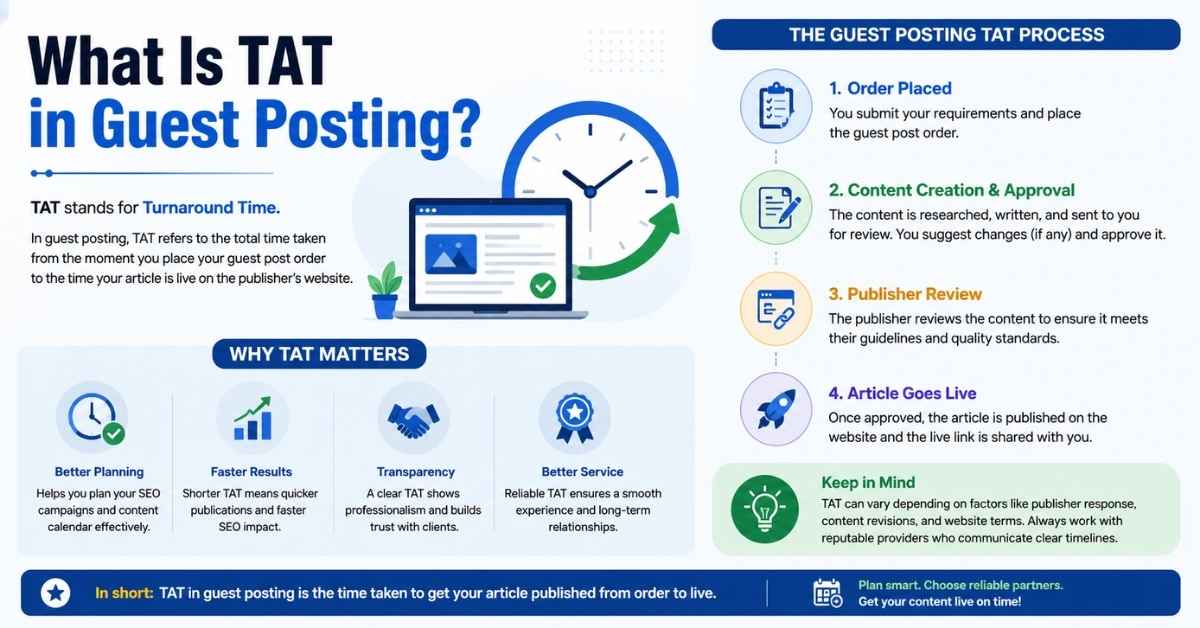
What is TAT in guest posting? TAT stands for Turnaround Time, which refers to the amount of time a publisher or website takes to review, approve, and publish your guest post after receiving it. Whether you're a business owner, SEO professional, blogger, or link-building agency, understanding guest posting turnaround time helps you plan campaigns, manage expectations, and choose reliable publishing partners.
While some websites offer instant TAT or express TAT, others may take several days or even weeks depending on their editorial review process, workload, and quality standards.
If you've ever seen terms like "24-hour TAT," "3-day TAT," or "standard TAT" while purchasing guest posts, this guide will explain exactly what they mean, why they matter, and how they can influence your SEO campaign, content marketing strategy, and overall publishing experience.
What Does TAT Mean in Guest Posting?
In simple terms, Turnaround Time (TAT) is the period between submitting a guest post and seeing it published live on the target website.
Unlike delivery time for physical products, TAT in guest posting involves multiple editorial steps before publication.
For example:
- You submit your article on Monday.
- The editor reviews it on Tuesday.
- Minor revisions are requested on Wednesday.
- You send the updated version on Thursday.
- The article goes live on Friday.
In this case, the guest posting TAT is five business days.
It's important to remember that TAT is not always the same as the publication date. Some publishers calculate turnaround time from the moment they receive your content, while others start counting after payment or final approval.
Why Publishers Mention TAT
Most websites include TAT to help clients understand:
- How long publication will take
- When backlinks will become live
- Expected campaign timelines
- Editorial workload
- Publishing schedule
Clear communication about TAT builds trust and reduces misunderstandings between clients and publishers.
Why Understanding TAT Matters Before You Buy a Guest Post
Many people focus only on Domain Authority (DA), traffic, or pricing when buying guest posts. However, Turnaround Time is equally important because it directly affects your campaign schedule.
Here are a few reasons why understanding TAT matters:
- Better SEO planning: Knowing when backlinks will go live helps coordinate your link-building strategy.
- Realistic expectations: You avoid unnecessary follow-up emails and frustration.
- Campaign management: Marketing teams can schedule promotions more effectively.
- Publisher comparison: TAT allows you to compare services beyond just price.
A website promising 24-hour TAT may sound attractive, but speed alone should never be the deciding factor. High-quality publishers often spend more time reviewing content to maintain editorial standards.
How the Guest Posting Process Works (Step-by-Step Timeline)
Understanding the complete guest posting workflow helps explain why turnaround times vary between websites.
Step 1: Website Selection
The process begins by choosing a website that matches your niche, audience, and SEO goals.
Consider factors such as:
- Website relevance
- Organic traffic
- Domain authority
- Editorial quality
- Publishing frequency
Selecting the right publisher increases the value of your backlink and improves the chances of long-term SEO success.
Step 2: Order Confirmation
Once you've selected a website, the publisher confirms:
- Pricing
- Anchor text
- Target URL
- Article requirements
- Estimated TAT
This stage ensures both parties have clear expectations before work begins.
Step 3: Content Submission
Next, the guest article is submitted for review.
The publisher checks:
- Formatting
- Grammar
- Originality
- Link placement
- Topic relevance
A well-prepared article often moves through the editorial process faster.
Step 4: Editorial Review
The editor evaluates whether the content meets the website's publishing guidelines.
Typical review areas include:
- Content quality
- Reader value
- SEO compliance
- Brand consistency
- External links
- Spam signals
High-authority websites usually perform more detailed editorial reviews, which can increase TAT.
Step 5: Revisions (If Required)
If changes are needed, the editor may request revisions.
Common reasons include:
- Promotional language
- Thin content
- Incorrect formatting
- Broken links
- Duplicate information
- Missing references
Every revision can extend the overall turnaround time.
Step 6: Final Approval
Once revisions are complete, the editor approves the article for publication.
At this point, the article enters the publishing queue.
Step 7: Publication
The guest post is published, and the publisher typically shares:
- Live URL
- Publication confirmation
- Screenshot (optional)
- Invoice (if applicable)
This marks the completion of the guest posting process.
Guest Posting Workflow and Expected TAT
| Stage | Typical Time |
| Website Selection | Same day |
| Order Confirmation | Few hours to 1 day |
| Content Submission | Same day |
| Editorial Review | 1–5 days |
| Revisions | 1–3 days |
| Final Approval | Same day |
| Publication | 1–7 days |
What Is a Normal TAT for Guest Posting?
There is no universal turnaround time because every publisher follows a different editorial process.
However, these timelines are common across the industry.
| Website Type | Typical TAT |
| Small Blogs | 1–3 days |
| Niche Websites | 3–7 days |
| Business Websites | 5–10 days |
| High-Authority Websites | 7–21 days |
| News & Editorial Publications | 2–6 weeks |
Generally, higher-quality websites require longer review periods because they carefully evaluate every submission before publishing.
A longer TAT doesn't necessarily indicate poor service. In many cases, it reflects a stronger commitment to quality and editorial standards.
What Factors Affect Guest Posting TAT?
Several factors influence how quickly your guest post is published.
Editorial Workload
Publishers handling dozens of submissions each week naturally require more time for review.
Website Authority
Popular websites often have stricter editorial guidelines and larger publishing queues.
Content Quality
Well-written, original, and properly formatted articles usually receive faster approval.
Poorly written content often requires multiple revisions, increasing turnaround time.
Number of Revision Requests
Every revision adds extra review time.
Submitting polished content from the beginning significantly reduces delays.
Holidays and Weekends
Many publishers process submissions only during business days.
If you submit content before a weekend or public holiday, publication may take longer than expected.
Manual Approval Process
Some websites manually review every guest post instead of using automated publishing systems.
While this increases TAT, it also improves content quality.
Publisher Communication Speed
Quick responses from both the client and publisher help keep the editorial process moving smoothly.
Delayed replies can significantly extend turnaround time.
Different Types of TAT Explained
Not every publisher offers the same turnaround options.
Understanding these categories helps you choose the right service for your campaign.
Instant TAT
An Instant TAT generally means publication within 24 hours.
This option is commonly offered by websites with streamlined editorial workflows or pre-approved publishing processes.
Express TAT
An Express TAT usually ranges from 1 to 2 business days.
It is suitable for urgent campaigns or time-sensitive announcements.
Standard TAT
The most common option across the guest posting industry is Standard TAT, typically lasting 3 to 7 business days.
This allows editors enough time to review content carefully while maintaining quality.
Extended TAT
Some premium publications require more than seven days because they follow rigorous editorial standards.
Although the wait is longer, these websites often provide stronger credibility and more authoritative backlinks.
TAT Comparison Table
| TAT Type | Typical Timeline | Best For |
| Instant TAT | Within 24 hours | Urgent campaigns |
| Express TAT | 1–2 business days | Fast link placements |
| Standard TAT | 3–7 business days | Most guest posting campaigns |
| Extended TAT | 7+ business days | High-authority editorial websites |
A faster turnaround time isn't always the best choice. When selecting a publisher, consider editorial quality, website relevance, organic traffic, and trustworthiness alongside TAT to ensure your guest posting investment delivers long-term SEO value.
Is a Faster TAT Always Better?
Many beginners assume that a 24-hour TAT is always the best option. While quick publishing can be useful for urgent campaigns, speed should never be your only deciding factor.
High-quality websites often have a longer editorial review process because they manually check every article for originality, readability, and compliance with their publishing guidelines. This extra time helps maintain the website's reputation and ensures readers receive valuable content.
Before choosing a publisher, consider these factors alongside TAT:
- Website authority
- Organic traffic
- Niche relevance
- Editorial quality
- Backlink value
- Publisher reputation
A slightly longer turnaround time can often result in a higher-quality backlink that provides better long-term SEO benefits.
Common Reasons Guest Posts Get Delayed
Even when a publisher provides an estimated Turnaround Time (TAT), unexpected delays can occur. Understanding these reasons helps you set realistic expectations and avoid unnecessary frustration.
Editorial Backlog
Popular websites often receive dozens of guest post submissions every week. Articles are reviewed in the order they are received, which can increase the publishing timeline.
Content Quality Issues
If your article contains:
- Grammar mistakes
- Duplicate content
- Promotional language
- Poor formatting
- Irrelevant links
the editor may request revisions before approving it.
Revision Requests
Every revision adds additional review time. The quicker you respond with the required changes, the sooner your article can move to publication.
Publisher Guidelines
Some publishers follow strict editorial policies regarding:
- Word count
- Internal links
- External links
- Images
- Formatting
- Author bios
Articles that don't meet these requirements usually require additional editing.
Holidays and Weekends
Many editorial teams work only on business days. Submissions made during weekends or public holidays may remain in the queue until normal working hours resume.
Communication Delays
Slow responses from either the client or the publisher can extend the entire process.
How to Reduce Guest Posting TAT Without Sacrificing Quality
Although you can't control every stage of the editorial process, you can improve your chances of faster publication.
Submit High-Quality Content
A well-written article with proper formatting is easier for editors to review and approve.
Follow Every Publishing Guideline
Before submitting your guest post, carefully review the publisher's requirements.
Pay attention to:
- Word count
- Formatting
- Link limits
- Image requirements
- Anchor text
- Author bio
Respond Quickly to Revision Requests
Editors appreciate prompt communication. Fast replies help keep your article moving through the publishing queue.
Choose Reliable Publishers
Work with websites that clearly communicate:
- Expected TAT
- Editorial process
- Revision policy
- Publishing schedule
Transparent publishers usually provide a better overall experience.
Plan Your SEO Campaign Early
If you're launching a product or seasonal campaign, submit guest posts well in advance instead of waiting until the last minute.
Guest Post Submission Checklist
Before sending your article, make sure you have:
| Checklist | Status |
| Original content | ✔ |
| Correct formatting | ✔ |
| Grammar checked | ✔ |
| Relevant backlinks | ✔ |
| Proper anchor text | ✔ |
| Images optimized (if required) | ✔ |
| Author bio included | ✔ |
| Publisher guidelines followed | ✔ |
TAT from the Client's Perspective
For businesses and SEO agencies, Turnaround Time is more than just a number—it directly affects campaign planning.
Clients use TAT to:
- Schedule backlink campaigns
- Launch new products
- Coordinate content marketing
- Track project deadlines
- Measure agency performance
Knowing when a guest post will be published helps marketing teams organize their SEO activities more effectively.
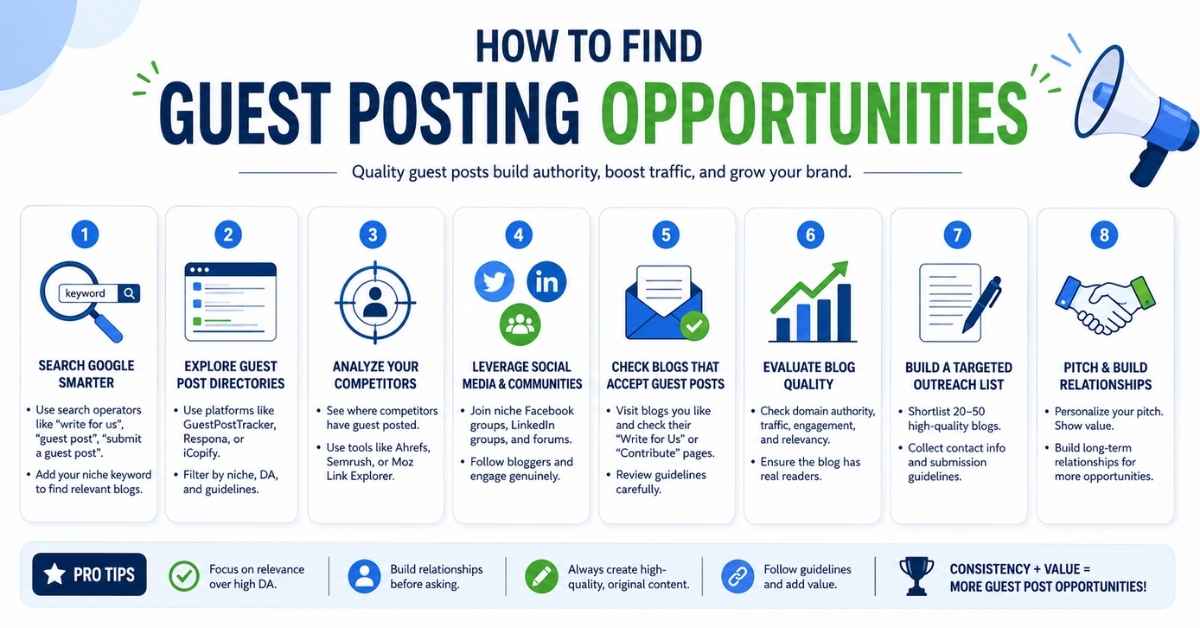
Learn More: How to Find Guest Posting Opportunities
TAT from the Publisher's Perspective
Publishers must balance speed with quality.
Before approving a guest article, editors often review:
- Originality
- Topic relevance
- Writing quality
- Link quality
- Spam signals
- User value
High-authority websites receive many submissions, making a structured editorial workflow essential. Longer TAT often reflects a commitment to maintaining publishing standards rather than poor service.
Common Myths About TAT in Guest Posting
Many misconceptions surround guest posting turnaround time. Let's separate fact from fiction.
Myth 1: Faster TAT Always Means Better Service
Reality: Fast publishing doesn't always indicate quality. Some websites publish quickly with minimal editorial review.
Myth 2: Longer TAT Means Poor Service
Reality: Many reputable websites take extra time to review every submission carefully.
Myth 3: Paid Guest Posts Are Published Instantly
Reality: Payment doesn't eliminate the editorial review process.
Myth 4: Revisions Don't Affect TAT
Reality: Every revision request can extend the turnaround timeline.
Myth 5: High-Authority Websites Always Have Slow TAT
Reality: Some premium publishers maintain efficient editorial systems while still delivering high-quality reviews.
Mistakes Buyers Make When Evaluating TAT
Avoid these common mistakes when choosing a guest posting service.
- Focusing only on publishing speed
- Ignoring website quality
- Overlooking niche relevance
- Not asking about revision policies
- Assuming weekends count as business days
- Choosing the cheapest publisher without checking credibility
- Failing to verify previous publications
A balanced evaluation leads to better long-term SEO results.
Expert Tips for Choosing a Guest Posting Service
If you're investing in guest posting, look beyond the advertised TAT.
Choose publishers that offer:
- Transparent turnaround times
- Clear editorial guidelines
- Strong organic traffic
- Relevant niche authority
- Responsive communication
- Manual editorial review
- Real publishing history
Quick Evaluation Checklist
| Factor | Why It Matters |
| Transparent TAT | Sets realistic expectations |
| Niche relevance | Improves backlink value |
| Editorial quality | Enhances trust |
| Organic traffic | Increases visibility |
| Communication | Reduces delays |
| Publishing history | Demonstrates reliability |
A trustworthy publisher combines reasonable TAT with consistent editorial standards.
Frequently Asked Questions
What is TAT in guest posting?
TAT (Turnaround Time) is the time required for a publisher to review, approve, and publish your guest post after submission.
What is a good turnaround time for guest posts?
A standard TAT of 3–7 business days is considered normal for most websites. High-authority publications may require one to three weeks.
Can TAT be negotiated?
In some cases, yes. Certain publishers offer express publishing for urgent campaigns, although this may involve an additional fee.
Does TAT affect SEO rankings?
No. Turnaround Time itself does not directly affect Google rankings. However, it influences when your backlink becomes live, which can impact the timing of your overall SEO campaign.
Why do high-authority websites have longer TAT?
These websites often perform detailed editorial reviews to ensure every article meets their quality standards before publication.
What happens if a publisher misses the promised TAT?
Contact the publisher for an update. Reputable websites usually explain the reason for the delay and provide a revised publication timeline.
Does requesting revisions increase TAT?
Yes. Every revision requires another editorial review, which can extend the publishing process.
Is a 24-hour TAT realistic?
Yes, but mostly for websites with streamlined editorial workflows. Premium publications often require more time to maintain content quality.
Final Thoughts
Understanding what is TAT in guest posting helps you make smarter decisions when buying or selling guest post services. Turnaround Time is an important part of the publishing process because it determines how long it takes for your content to go live. However, fast publication should never be the only priority.
When evaluating a guest posting opportunity, consider editorial quality, website authority, organic traffic, niche relevance, and publisher transparency alongside the estimated TAT. A publisher that communicates clearly and follows a thorough review process is often a better long-term partner than one promising unrealistically fast publishing.
By planning your SEO campaigns in advance, submitting high-quality content, and working with reputable publishers, you can reduce unnecessary delays while earning valuable backlinks that support sustainable search engine growth.
Expert in SEO and link building with over 10 years of experience helping businesses grow their organic presence.